
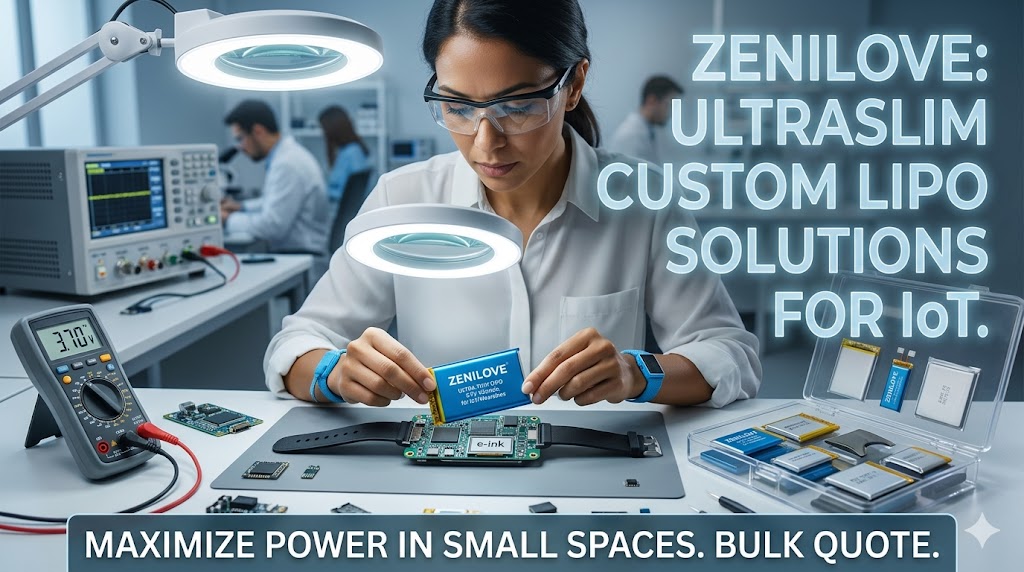
As IoT devices become smaller, smarter, and more power-efficient, designers face increasing challenges in selecting the right battery solution. A thin LiPo battery for IoT applications offers a compact, lightweight, and flexible energy source that supports modern device requirements.
Unlike traditional battery formats, ultra-thin lithium polymer batteries can be customized to fit limited internal space while maintaining stable performance. Therefore, engineers and product designers are increasingly adopting custom battery solutions to optimize both device design and functionality.
In addition, as IoT ecosystems expand across industries such as healthcare, smart homes, and wearable technology, battery performance is critical to ensuring long-term reliability. If you’re unsure which to choose, take a look at our polymer battery products.
.jpg)
Benefits of Thin LiPo Battery for IoT Devices
A thin LiPo battery for IoT devices offers several advantages, making it ideal for compact electronics.
First, its slim and flexible structure allows seamless integration into space-constrained designs. Engineers can customize thin lithium-polymer batteries to fit the device layout, which improves overall product design flexibility.
Second, these batteries offer stable voltage output and efficient energy usage. As a result, IoT devices can operate longer without frequent charging, which is essential for remote or low-maintenance applications.
Moreover, safety performance is enhanced through advanced materials and built-in protection circuits. This ensures that custom thin LiPo battery packs meet the reliability standards required for commercial deployment.
If you are designing energy systems for connected devices, you may also explore our
custom battery solutions for IoT devices
to better understand integration options and design considerations.
Applications of Thin LiPo Battery for IoT Systems
The versatility of a thin LiPo battery for IoT makes it suitable for a wide range of use cases.
In wearable devices such as smartwatches and fitness trackers, ultra-thin batteries enable sleek, lightweight designs while maintaining sufficient battery life.
In healthcare IoT, including remote monitoring devices, reliable and compact power sources are essential. Thin lithium polymer batteries ensure continuous operation without adding unnecessary bulk.
Additionally, smart home devices—such as sensors, smart locks, and tracking systems—benefit from the flexibility and efficiency of custom battery designs. These devices often require long standby times and stable performance, which a custom thin LiPo battery can provide.
For more insights into IoT energy trends and low-power device design, refer to the IEEE IoT Resource Center, which highlights current developments in IoT systems and power management.
.jpg)
How to Select the Right Thin LiPo Battery for IoT Projects
Choosing the right thin LiPo battery for IoT applications requires careful consideration of several factors.
First, designers should evaluate battery dimensions and capacity to ensure compatibility with device constraints. Customization is often necessary to achieve the optimal balance between size and performance.
Second, protection features such as overcharge, over-discharge, and short-circuit protection are essential for safe operation. Working with a supplier that provides integrated battery management solutions is highly recommended.
Finally, consider lifecycle performance and supplier reliability. A trusted manufacturer will offer consistent quality, compliance with certifications, and technical support throughout the product lifecycle.
Conclusion
A thin LiPo battery for IoT provides an efficient, adaptable energy solution for modern connected devices. With its compact form factor, customizable design, and reliable performance, it enables designers to build smarter and more innovative products.
By selecting the right battery solution and supplier, businesses can ensure long-term device stability while meeting the growing demands of IoT applications.